Women's leather boots, rain or winter
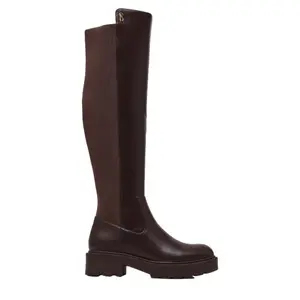
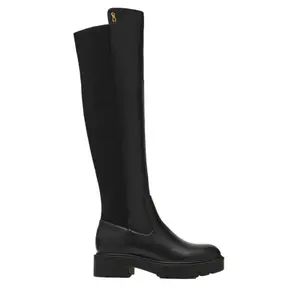


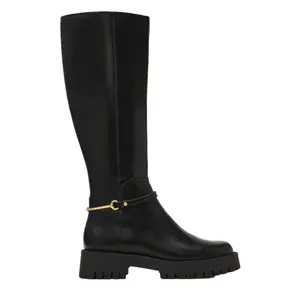
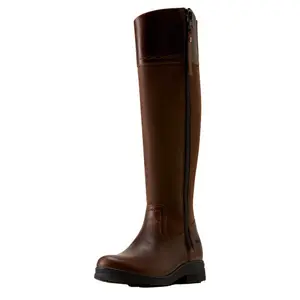


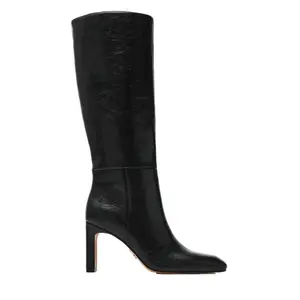

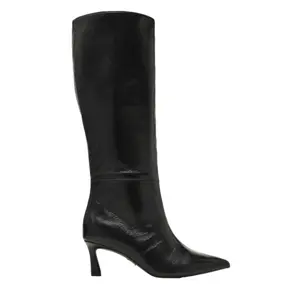
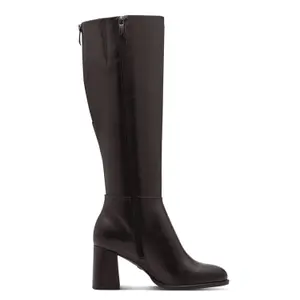


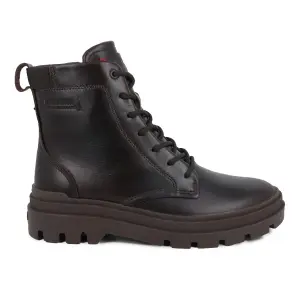


The women's boots are chosen primarily based on their use: knee-high leather boots for the city, over-the-knee boots for a dressy outfit, rubber rain boots, or lined winter boots to keep out the cold. Among the brands available are: Bronx, Geox, Buffalo, Rouchette, and Palladium.
The height of the shaft and the calf circumference determine comfort: a boot that is tight on the calf is uncomfortable to wear all day, while a shaft that is too wide droops. A zipper or a flexible shaft makes them easier to put on.
What types of women's boots to choose?
Women's boots are distinguished by the height of their shaft and their intended use.
- The knee-high boot rises just below the knee. Made of smooth leather and with a flat or block heel, it's the most versatile for the city.
- The over-the-knee boot goes above the knee. It can be worn with a short skirt or a dress, and with a slim fit jean that it completely covers.
- The mid-calf boot stops halfway up the leg: easier to slip on, it allows for breathability and fits under wide trousers.
- The rain boot, made of rubber, protects against water and mud, suitable for both city and countryside.
- The winter boot, lined and with a rugged sole, keeps your foot warm and dry on the snow.
Leather, rubber or textile: which material to choose?
Leather boots remain the best choice for the city: smooth leather patinas, cleans easily and, when well conditioned, resists light rain. Suede and nubuck, softer and matte, require waterproofing and are sensitive to puddles.
Rubber is the material used for rain boots: completely waterproof, it doesn’t provide warmth on its own. Winter boots often combine a textile or treated leather upper, an insulating lining, and a thick sole that blocks cold from the ground. Synthetic materials, offered by some brands in a vegan version, are lighter.
How to choose boots for wide calves?
For wide calves, compare your calf measurement to the boot shaft circumference when the brand specifies it, rather than relying on your shoe size. Measure the calf at the widest point, with a tape measure laid flat, and leave one or two centimetres of ease if you're wearing trousers inside the boot.
Three details help when the measurement is just right: an elastic gusset on the side, a full-length zipper, and a soft leather shaft that moulds to the calf over time. Conversely, a shaft that's too wide on a slim leg gaps and sags: choose a fitted or laced shaft instead.
What to look for in rain boots or winter boots?
Rain boots are judged on their waterproofing and sole: a single piece rubber without a low seam, and a deep tread that grips on wet surfaces. A shaft that narrows at the top prevents water from entering from above.
Winter boots are chosen based on lining, waterproofing, and sole. A lined or synthetic lining keeps warmth, a membrane or treated leather blocks melted snow, and a thick, rugged rubber sole insulates from the ground and reduces slipping.
How to wear women's boots?
With a dress or a skirt, knee-high boots are worn with opaque tights of the same colour to elongate the leg; leave a few centimetres of skin or tights between the hem and the shaft. A midi dress matches with a boot that disappears under the hem.
With trousers, tuck a slim jeans or legging into the boot, or let a straight leg pant fall over a mid-calf boot. Brown or cognac boots warm up a denim outfit, while black boots dress up a dark outfit.
Which boot brands to choose?
These boot brands each stand out with a specific style or expertise.
- Bronx, a Dutch brand, is recognised for its bold style. Its models are gathered on the Bronx boots page.
- Geox, an Italian brand, became known for its breathable sole, thanks to a membrane that allows sweat to escape while keeping water out.
- Buffalo has built its reputation on platform soles and offers many of its models in vegan materials.
- Rouchette, a French brand from Maine-et-Loire, presents itself as a specialist in rubber boots and outdoor footwear, from the garden to the city.
- Palladium, a French brand that originated from producing airplane tires, is known for its sturdy canvas and rubber shoes.
- Tamaris, a German brand, outfits many of its shoes with patented comfort technologies, on both flat and heeled boots.
What other brand pages for boots are there?
Other brands have their own page of branded boots, handy if you already know what you’re looking for.
- The page Steve Madden boots brings together models from the American brand.
- The page Les Tropéziennes by M. Belarbi boots showcases the boots from a brand known mainly for its sandals.
- The page Pepe Jeans boots gathers boots from the brand born from denim.
- The page Pikolinos boots groups models from the Spanish brand.
What shoes to wear when it’s not cold enough for boots?
Mid-season shoes take over from boots: ankle boots stop at the ankle and can be worn with both trousers and dresses. For active days, sneakers remain the most comfortable choice, and at home slippers keep your feet warm. All other pairs are on the women's shoes page.
When to find boots at reduced prices?
You look for your boots at the first chill: Black Friday falls at that time. The winter sales, in the middle of the season, are another occasion for boots on sale.
Discounted pairs in November are found on the Black Friday boots page, sale markdowns on the women's shoes sales page, and other discounts on the Promotions page. Fast delivery and best price guaranteed.
Frequently asked questions
What’s the difference between boots and over-the-knee boots?
A boot stops below the knee, while an over-the-knee boot rises above, sometimes to mid-thigh. The over-the-knee boot requires a soft or stretchy shaft to conform to the knee while walking and is especially worn with a skirt, dress, or close-fitting trousers.
How to care for leather boots?
Brush off dust dry, then apply a cream suitable for the leather colour to nourish it, and a waterproofing agent before winter. After rain, allow the boots to dry in the air, away from a radiator, with newspaper inside to maintain their shape.
Should you go a size up for winter boots?
Not necessarily: keep your usual size if the lining is thin. With a thick lining or warm socks, going half a size up can prevent your foot from being cramped, as a tight foot cools down faster. The size advice from the product sheet remains the best indicator.
How to prevent boots from sagging?
Store them standing up, with boot trees or rolled cardboard in the shaft, rather than lying flat in a box. A soft shaft that bends at the same spot eventually marks the leather permanently.
Do rain boots keep you warm?
A simple rubber boot protects against water but insulates poorly: in cold weather, the foot cools down quickly. Choose a model with a warm lining, lined or in neoprene, or add thick wool socks if the size allows.